
Emergency Roof Leak: First Steps
What to do inside the home while waiting for safe temporary protection and a source-focused inspection.
Read guideResidential roofing service
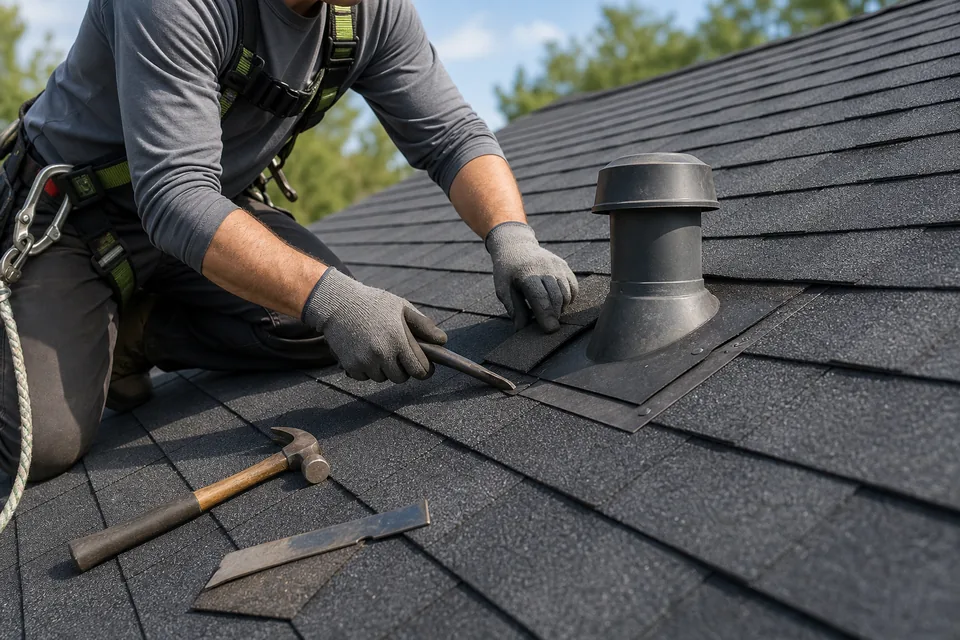
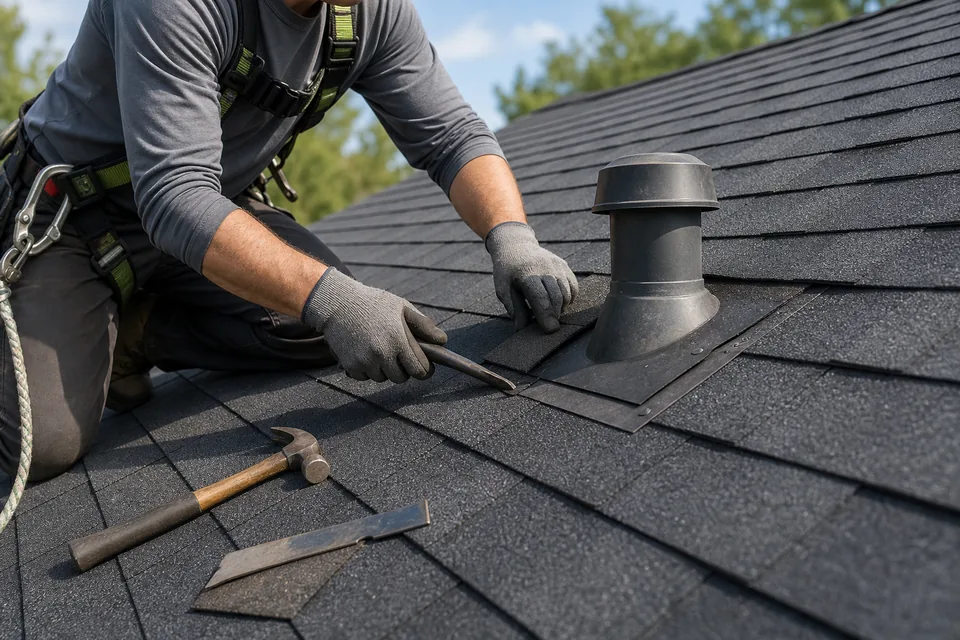
The stain inside a home is rarely directly below the roof failure. Water can travel along decking, rafters, insulation, and fasteners before it becomes visible. Effective leak repair begins by tracing that path.
Warning signs
Quick facts
Our process
The exact scope changes by property, but the decision process stays consistent.
Review when and where the leak appears
Inspect the attic and exterior roof transitions
Test the most likely entry points when appropriate
Repair the source and explain any interior follow-up needed
Scope options
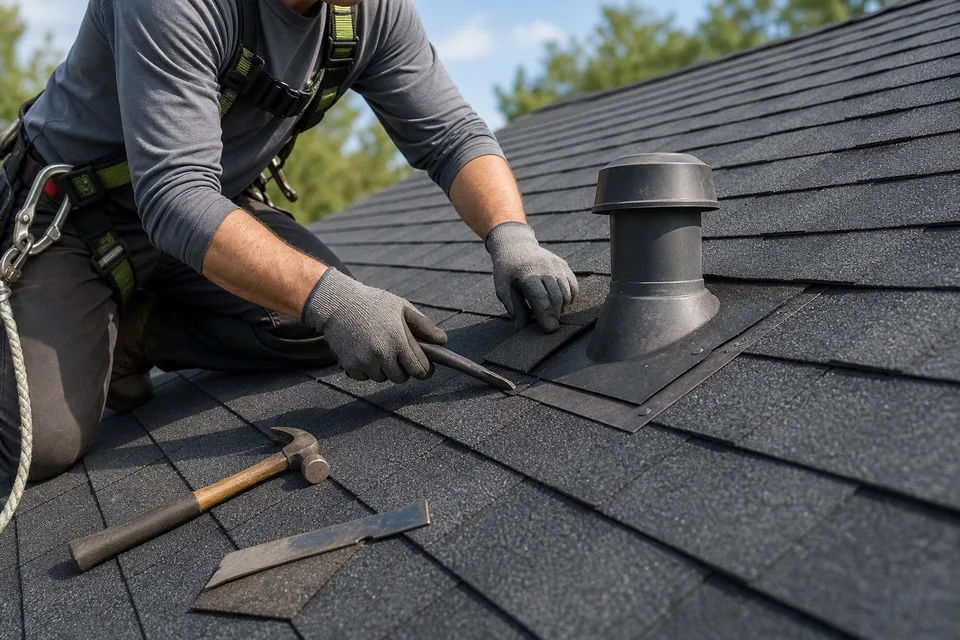
Final production content should name the real materials, warranty options, crew qualifications, and limitations offered by the contractor.
Common questions
Wind direction, rainfall intensity, and the path water takes can change from one storm to another. That pattern is useful diagnostic information.
A small stain can represent a larger concealed moisture path. Early inspection usually limits uncertainty and potential secondary damage.
Service areas
Related guidance
What to do inside the home while waiting for safe temporary protection and a source-focused inspection.
Read guide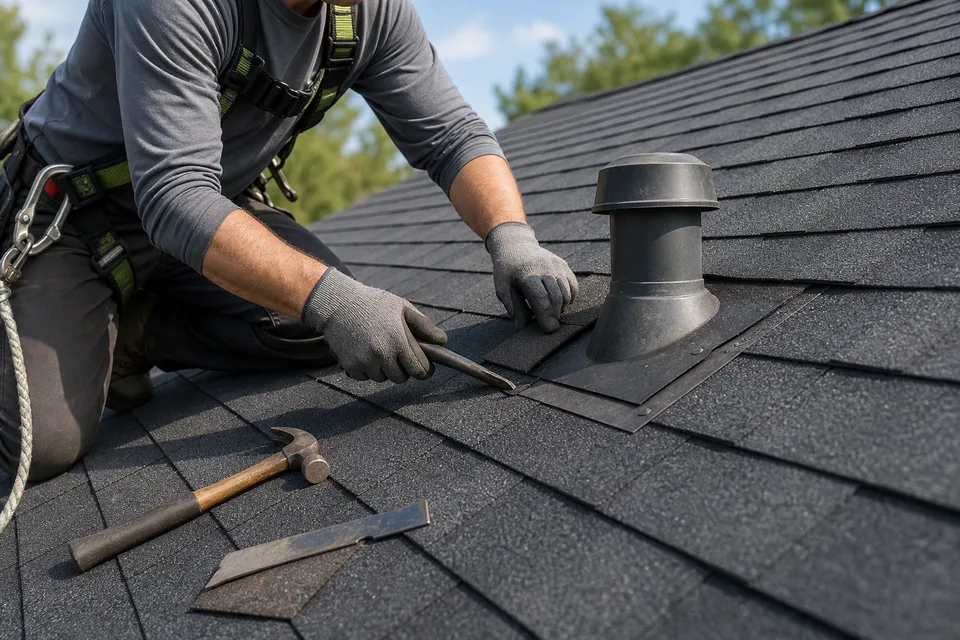
Preventive checks for drainage, flashing, penetrations, tree debris, attic evidence, and aging materials.
Read guideRelated services
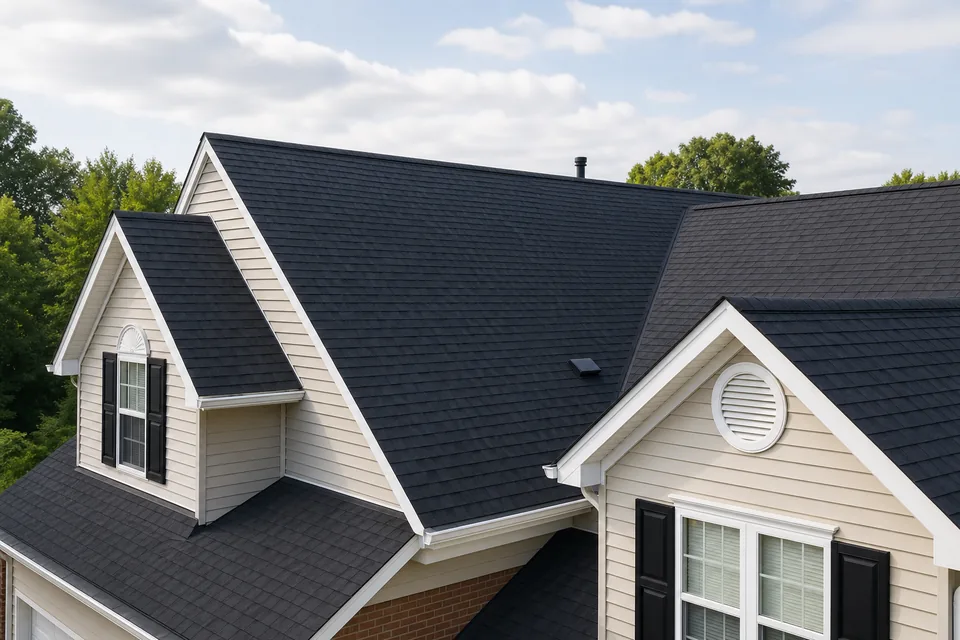
Targeted repairs for shingles, flashing, vents, valleys, and other isolated roofing problems.
Explore service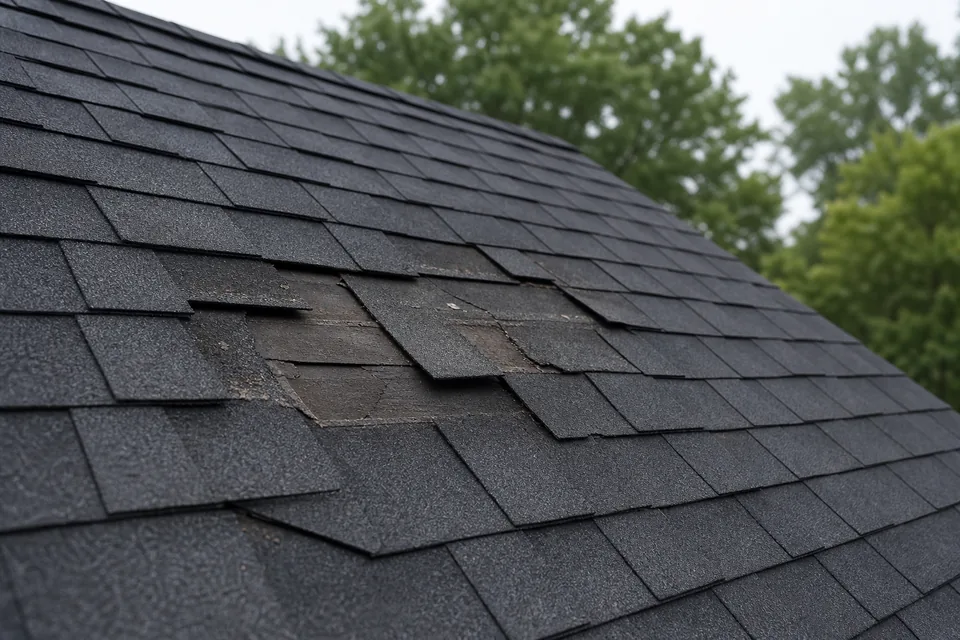
Inspection, emergency protection, documentation, and repairs after wind, rain, hail, or falling debris.
Explore service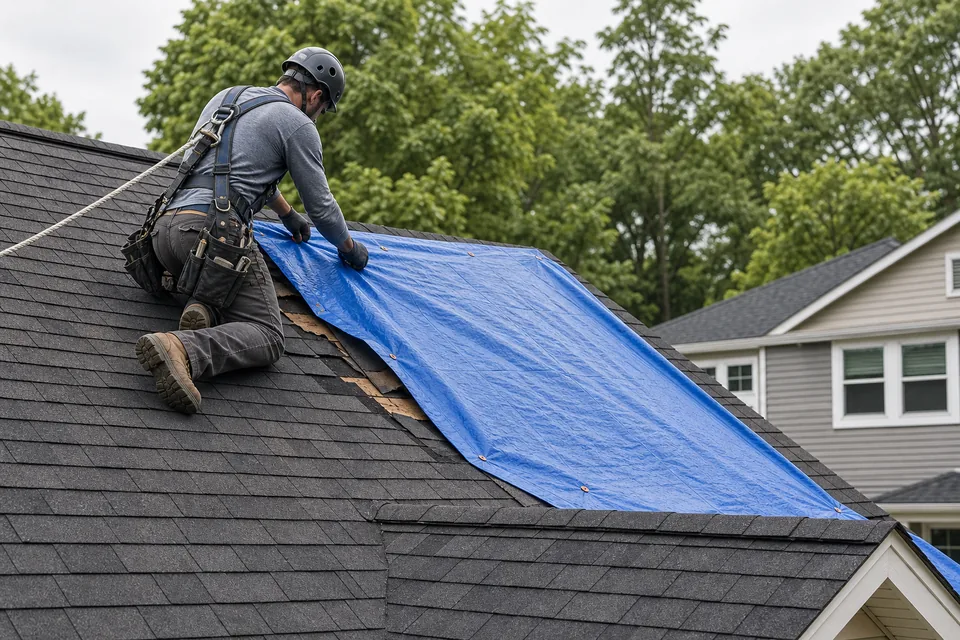
Temporary weather protection designed to limit additional exposure until permanent repairs can be completed.
Explore serviceResponsive roofing help
Start with a documented inspection and a clear next step.