
Active leak
Immediate safety, interior mitigation, inspection, and temporary protection.
Learn moreRoofing resource center
Straightforward answers about emergency protection, repairability, replacement, storm effects, inspection, documentation, and scheduling.

Quick paths
Short answers stay on this page; detailed service and article links provide the next level of context.
Immediate safety, interior mitigation, inspection, and temporary protection.
Learn moreGround-level signs, safe inspection timing, documentation, and repair scope.
Learn moreRoof age, surrounding condition, repeated failures, and repairability.
Learn moreWhat is reviewed, how findings are organized, and what happens next.
Learn moreFAQ category
Keep people away from wet electrical fixtures or sagging ceilings, move belongings when it is safe, collect the water, and call for professional help. Do not climb onto a wet or damaged roof.
Learn moreNo. It is temporary mitigation intended to limit additional exposure until a permanent roof repair can be completed.
FAQ category
Often, yes. The answer depends on the source, roof age, surrounding condition, material availability, and whether failures are isolated or widespread.
Learn moreWater can travel along decking, rafters, insulation, and fasteners before becoming visible. That is why source tracing matters.
FAQ category
Compare the damage extent, cause, roof age, prior repairs, surrounding condition, material match, and expected remaining service life.
Learn moreMany residential projects take one to several working days, with size, pitch, access, weather, and decking repairs affecting the schedule.
FAQ category
Yes. Lifted or creased shingles, disturbed flashing, and hail effects often require a close professional inspection.
Learn moreUse ground-level and interior observations only. Wet, steep, or damaged roofs are dangerous and should be inspected by trained professionals.
FAQ category
The report should identify inspected areas, visible conditions, photographs, limitations, priorities, and recommended next steps.
Learn moreNo. A contractor can document conditions and price construction work. The insurance carrier decides policy coverage and settlement.
FAQ category
Often not, provided the team has permission and safe exterior access. Interior or attic inspection requires arranged access.
Compare material specifications, flashing, ventilation, decking process, property protection, cleanup, payment terms, change orders, and warranties.
Learn moreRelated services
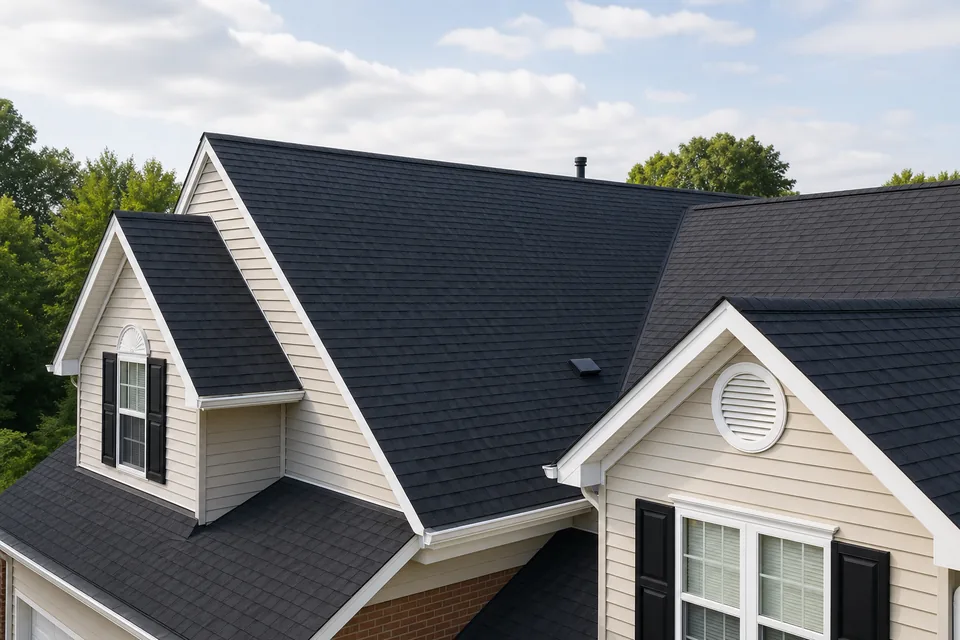
Targeted repairs for shingles, flashing, vents, valleys, and other isolated roofing problems.
Explore service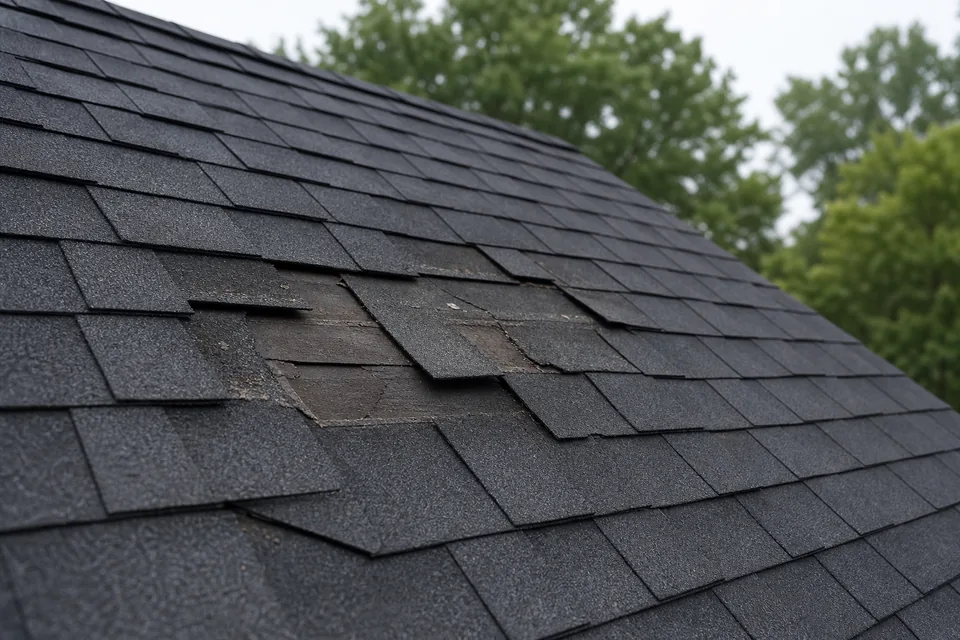
Inspection, emergency protection, documentation, and repairs after wind, rain, hail, or falling debris.
Explore service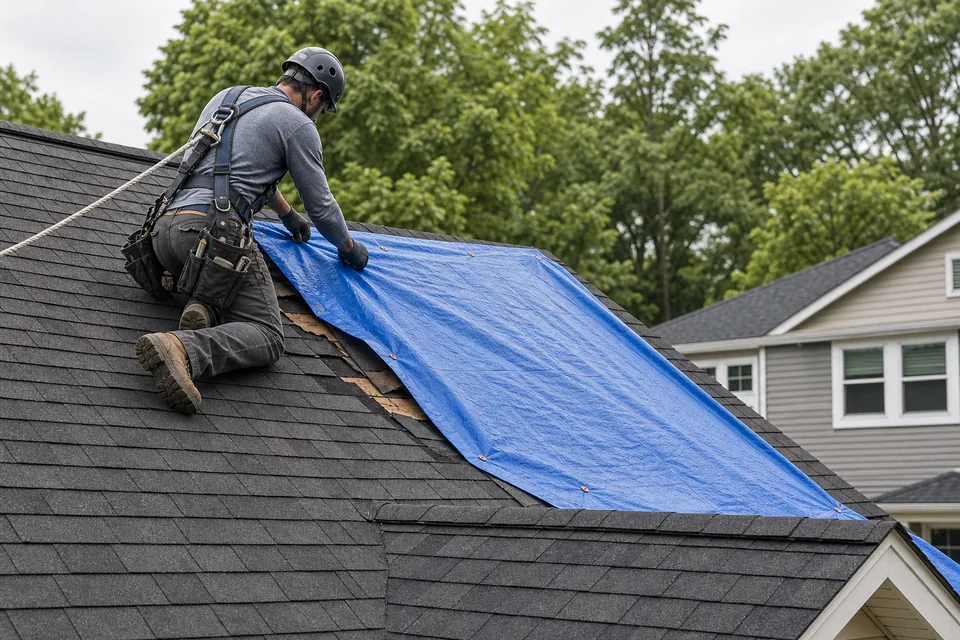
Temporary weather protection designed to limit additional exposure until permanent repairs can be completed.
Explore serviceResponsive roofing help
Start with a documented inspection and a clear next step.